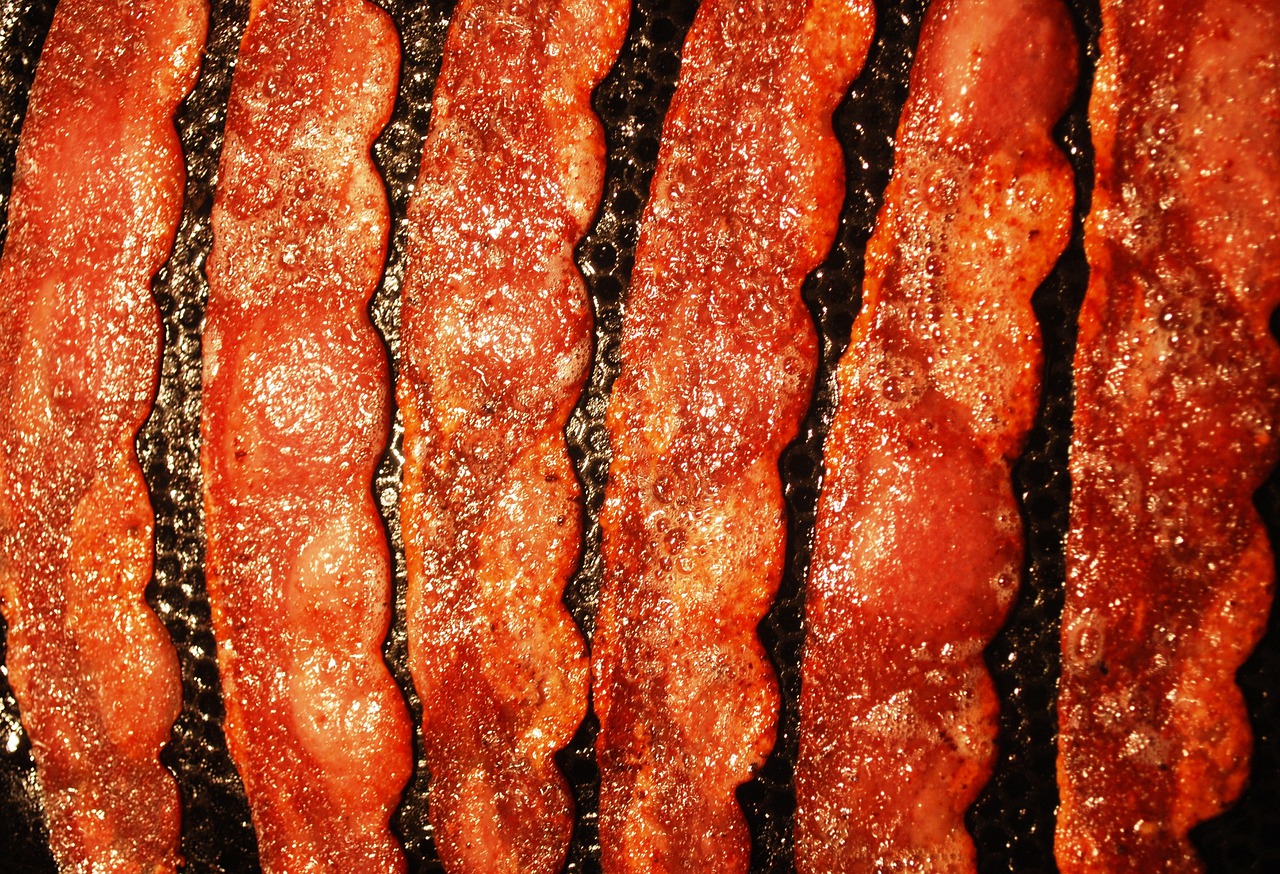
Bacon is a salt-cured meat made from a variety of cuts of pork, usually from the belly and the back. Most commonly, it is consumed as a side dish, and it is also used to flavor and accent other foods. However, it has many calories and should be consumed in moderation.
Protein
Bacon is a salt-cured pork product that comes in a variety of forms. Most commonly, it comes from the belly or less fatty back side of the pig. It is typically eaten on its own or as part of a meal as a flavouring and accent. Bacon has many health benefits and contains fewer calories than other meats.
The most comprehensive database of nutrition information is maintained by the USDA. Unfortunately, it contains many inaccuracies, errors, and ambiguities. The database is currently scheduled to move to a new site called FoodData Central. FoodData Central is far from perfect, but it’s a good place to start.
Fat
Bacon is a salt-cured product that comes from a variety of cuts of pork. Typically, the back and less fatty belly portion of the pig are used. It is commonly served as a side dish but can also be the main ingredient in a meal. In addition, bacon is used in recipes as a flavouring or accent.
Bacon’s calorie content is largely dependent on the method in which it is cooked. Cooking bacon can increase the amount of calories in the food, so the preparation and storage process are critical factors. In fact, 6 of the foods that have the most calories are pork, bacon, rendered fat, cooked.
Carbohydrate
Bacon is a salt-cured pork product that comes in a variety of cuts. It is typically made from the belly of the animal, but is also used from the back, the less fatty part of the animal. It is commonly served as a side dish or a main ingredient in recipes.
Using a nutrition calculator, you can find out how many calories bacon has in a specific serving. To find out exactly how much bacon you should be consuming, you should look up the amount of protein, fat, and carbohydrates in bacon. This will give you a more accurate estimate of the total calories in a serving.
The fat, carbohydrates, and proteins in bacon provide the energy needed for the body to perform its functions. The protein helps to repair and build tissues. Ideally, 10 to 35 percent of your daily diet should come from protein. One slice of cooked bacon contains about 46 calories. If you cook four slices of bacon, the calorie content is about 185 calories. However, you should also keep in mind that 65% of these calories are fat. The rest is made up of trace amounts of carbohydrates.
Saturated fat
When we eat bacon, a significant portion of the calories come from saturated fat, the bad guy of the fat world. This kind of fat is associated with heart disease and increased risk of clogged arteries, so it is important to limit saturated fat consumption. According to the Cleveland Clinic, we should consume only 7 percent of the total calories we consume from fat. So if we eat a medium-sized serving of bacon, we are consuming about 44 grams of saturated fat. The rest of the fat comes from other sources, including polyunsaturated fats and monounsaturated fats.
Bacon is also high in protein. Protein is essential for building and repairing tissues, so it should make up 10 to 35 percent of the total calories in your daily diet. A medium-sized piece of bacon contains approximately four grams of protein. The remaining calories come from trace amounts of carbohydrates, which help fuel all the body’s cells.